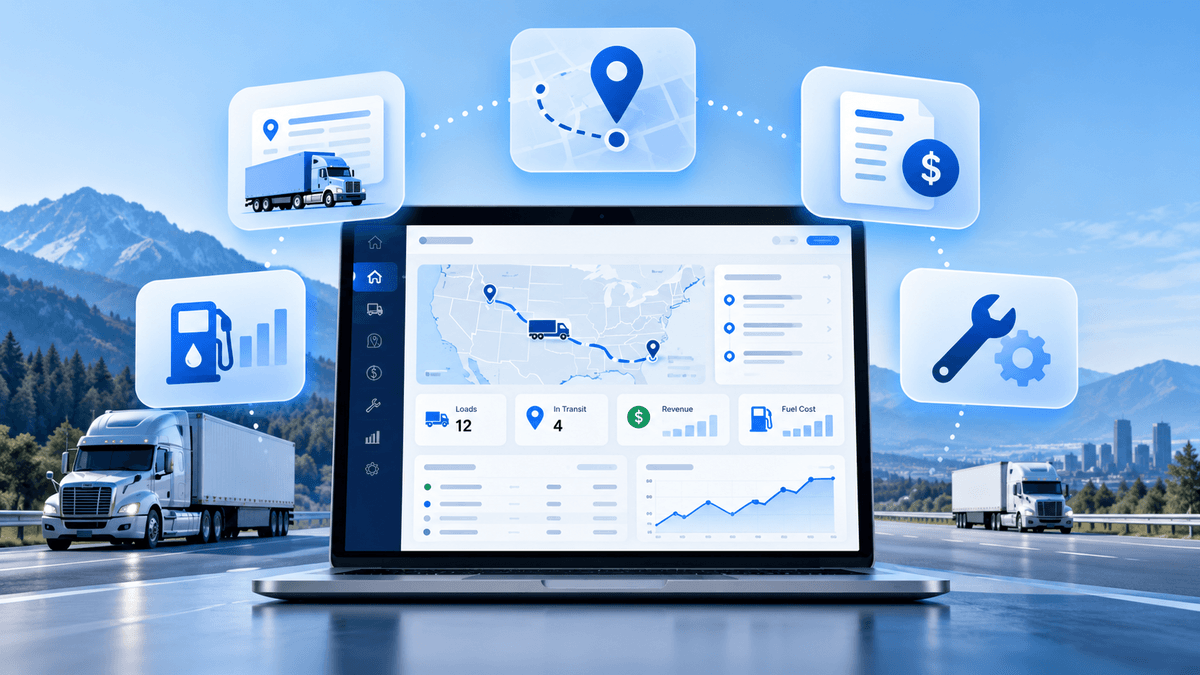
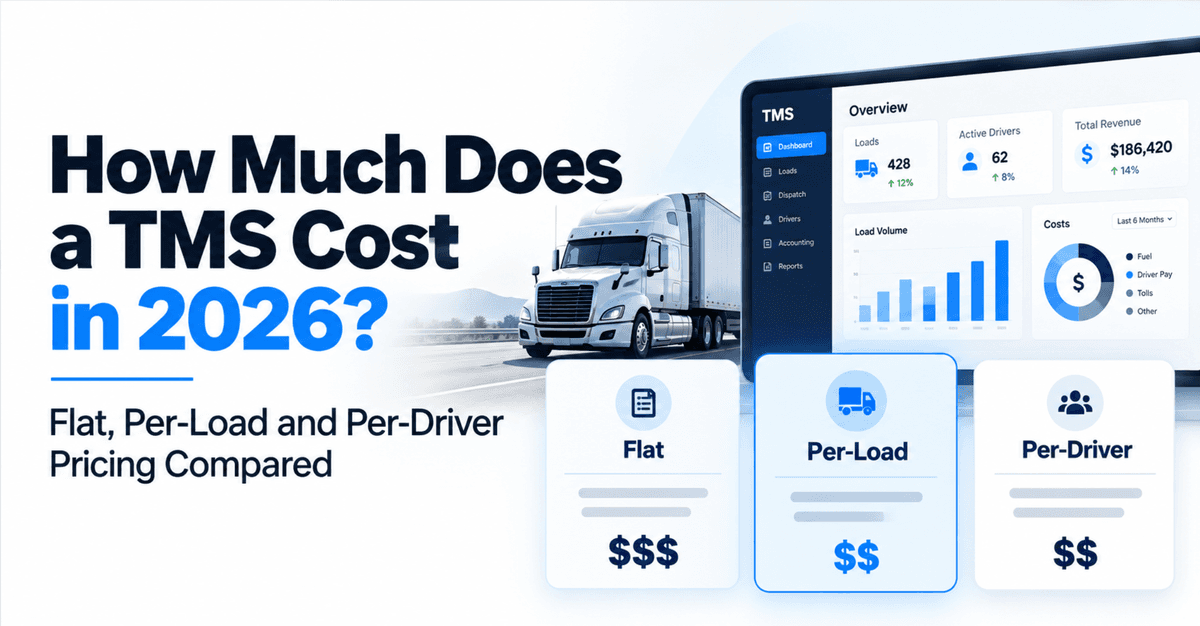
Finding the right Transportation Management System (TMS) is one of the most critical decisions you’ll make for your trucking business. Whether you’re an owner-operator running a single truck or managing a small fleet, the features you choose can directly impact your bottom line—saving thousands in fuel costs, reducing driver hours, and improving customer satisfaction.
In 2026, the TMS landscape is more competitive than ever. The old days of basic load tracking are gone. Today’s successful carriers—from owner-operators in Texas to fleet managers in California—rely on TMS platforms that combine automation, real-time visibility, and intelligent analytics.
But not all features are created equal. Some sound impressive but deliver little practical value. Others quietly transform your operations and profitability.
This guide breaks down the 5 must-have TMS features you need to thrive in today’s transportation market—whether you’re operating in the competitive Northeast corridor, the growing Southwest market, or anywhere in between.
1. Automated Dispatch & Intelligent Load Matching
Why It Matters: Manual dispatch is a silent profit killer.
When you’re managing loads manually—jumping between phone calls, emails, and spreadsheets—you’re wasting driver time and fuel. Worse, you’re making decisions with incomplete data.
Among all TMS features, automated dispatch delivers the fastest payback. Modern TMS platforms deliver automated dispatch by intelligently matching loads to available drivers based on:
- Driver location and capacity
- Vehicle type and specifications
- Delivery requirements and time windows
- Historical performance and preferences
- Current fuel prices and route costs
The Impact Across US Markets:
- Owner-operators (nationwide): Automated dispatch reduces empty miles by 15-25%, directly translating to 5-8% fuel savings
- Texas fleets: With rising fuel costs and competition in the Permian Basin region, route optimization alone saves $2,000-5,000 monthly for a 10-truck operation
- California carriers: Navigate strict emissions regulations while optimizing routes for air quality considerations using data-driven dispatch
Real Numbers: A carrier managing 50 loads daily can eliminate 200-300 empty miles per month through intelligent matching—that’s approximately $1,500 in recovered revenue per month.
2. Real-Time GPS Tracking & Visibility
Why It Matters: Visibility isn’t luxury—it’s essential for customer retention and risk management.
Shippers no longer accept vague delivery estimates. Your customers—whether they’re e-commerce companies, manufacturers, or retail chains—expect minute-by-minute tracking of their freight.
Modern TMS platforms provide:
- Real-time GPS tracking on every load
- Automated customer notifications at key milestones
- Geofence alerts for unauthorized stops or route deviations
- Historical heat maps showing driver and vehicle performance patterns
- Proof of delivery with timestamps and digital signatures
Why This Saves Money Beyond Customer Satisfaction:
- Insurance claims reduction: GPS data provides irrefutable evidence in accident disputes, reducing liability exposure
- Theft prevention: Real-time tracking deters theft and enables rapid recovery of stolen freight
- Compliance documentation: Automatic recording of hours of service, location, and events simplifies FMCSA compliance
Regional Considerations:
- High-theft corridors (I-95 Northeast, Los Angeles-Las Vegas routes): Tracking becomes essential security infrastructure
- Rural operations (Midwest, Great Plains): Historical tracking data helps identify which loads move efficiently on less-trafficked routes
- Urban delivery (Chicago, Dallas, Atlanta hubs): Detailed stop data reveals loading dock access patterns and optimal timing
3. Fuel Optimization & Cost Management Tools
Why It Matters: Fuel is your second-largest operating expense after labor—and it’s variable.
A 10-truck fleet operating 24/7 spends $150,000+ annually on fuel. Even 5% efficiency gains mean $7,500 in annual savings. But fuel optimization isn’t just about route math—it’s about:
- Real-time fuel pricing integration: Some TMS platforms integrate fuel card data and spot prices, helping drivers fuel at optimal locations
- Predictive fuel consumption: AI-powered systems forecast fuel usage by load weight, route elevation, weather, and driver behavior
- Idle time monitoring: Unnecessary idling wastes fuel and increases emissions—modern systems alert drivers automatically
- Fuel surcharge recovery: Automated calculation and application of fuel surcharges ensures margins aren’t eroded
Geo-Specific Fuel Dynamics:
- Mountain routes (Colorado, Utah, Wyoming): Elevation changes significantly impact fuel consumption; intelligent TMS systems adjust route recommendations based on terrain
- Texas operations: Summer heat increases fuel consumption for refrigerated loads by 8-12%—premium TMS platforms account for seasonal variations
- California: Strict emissions requirements may limit ethanol blends; TMS integration with fuel card networks ensures regulatory compliance
Example ROI: A 20-truck fleet saving just 0.5 miles per load across 100 daily loads = 50 miles saved daily = 12,000 miles annually = ~$4,000+ annual fuel savings at current rates.
4. Driver Performance Analytics & Coaching
Why It Matters: Your drivers are your brand—and they’re your biggest operational variable.
Two drivers covering identical routes can deliver vastly different results:
- Fuel consumption variance: 8-15%
- Customer satisfaction variance: 4.2 to 4.8 stars
- Safety incident rates: 0 to multiple incidents annually
A robust TMS provides:
- Scorecard dashboards: Real-time metrics on safety, fuel efficiency, on-time delivery, and customer ratings
- Behavioral coaching: AI-identified patterns (harsh braking, speeding, excessive idling) trigger automated driver coaching sessions
- Incentive program integration: Gamified performance tracking with bonus structures based on TMS-tracked metrics
- Driver tenure analytics: Understanding which coaching leads to long-term retention vs. turnover
- Predictive attrition: Systems identifying at-risk drivers before they leave
Why Driver Quality Impacts Your Bottom Line:
- Insurance premiums: Good driver metrics lower premiums by 10-15% annually
- Customer retention: On-time, safe delivery is a primary selection factor for shippers
- Recruitment: Strong driver reviews on carrier rating sites (based on actual data) attract quality talent
- Compliance: Documented coaching and performance management reduces regulatory liability
Regional Talent Markets:
- Texas & Oklahoma: High driver turnover in oilfield regions; data-driven coaching improves retention by 12-18%
- California: Strict labor regulations require documented performance conversations; TMS provides compliance trail
- Midwest: Owner-operator heavy markets benefit from peer comparison data that motivates performance
5. Integration with Accounting & Financial Management Systems
Why It Matters: Broken data means broken decisions.
Most TMS platforms operate as islands—collecting rich operational data that never connects to financial reality. This creates blind spots:
- You don’t know profitability by lane, customer, or driver
- Invoicing delays due to manual data entry
- Accounting teams waste hours reconciling load data with billing records
- You can’t answer simple questions: “Which customers are actually profitable?”
Modern TMS platforms integrate with:
- Accounting software (QuickBooks, Sage, NetSuite)
- Fuel card networks (automatic transaction pulls)
- Factoring platforms (real-time load status for early payment)
- Insurance platforms (claims documentation, premium optimization)
- Customer portals (automated, real-time billing)
Financial Impact:
- Cash flow acceleration: Accurate, fast invoicing means 2-5 day reduction in payment collection (worth $10,000+ for a fleet processing $50,000 in weekly loads)
- Profitability clarity: Understanding lane profitability enables smarter pricing and customer decisions
- Compliance & audit: Automated documentation reduces accounting overhead by 15-20%
- Factoring optimization: Real-time load data enables better terms with factoring partners
For Owner-Operators Specifically:
Owner-operators often rely on factoring to bridge cash gaps. Integration between TMS and factoring platforms can:
- Reduce factoring fees by 0.5-1% through faster settlement data
- Enable better terms by providing lending partners with real-time utilization data
- Automatically track receivables aging
Common TMS Features That Sound Good But Aren’t Essential
Before investing in a TMS, skip these non-essential features that add cost without proportional value:
- Social media integration: Nice-to-have, not need-to-have
- Weather routing: Useful only in specific seasons; most TMS route logic accounts for weather through historical data
- IoT sensor suites: Valuable at enterprise scale, questionable ROI for fleets under 100 trucks
- Blockchain-based load verification: Cool technology, but current implementations don’t solve real problems cheaper than existing solutions
How to Choose the Right TMS Features for Your Operation
For Owner-Operators:
- Start with automated dispatch and real-time tracking—these deliver the fastest ROI
- Prioritize simple, mobile-first interfaces you can actually use during downtime
- Look for platforms with transparent, flat-rate pricing (avoid per-load models that punish high volume)
For Small Fleets (10-50 trucks):
- Prioritize integration with your accounting system
- Choose platforms with driver coaching tools (biggest retention driver)
- Ensure fuel optimization features are built-in, not add-ons
For Growth-Stage Fleets (50-150 trucks):
- Investigate AI-powered demand forecasting
- Evaluate customer self-service portals (reduce customer service load)
- Assess scalability of reporting and analytics
Conclusion: The TMS Features That Matter Most
The five features outlined here—automated dispatch, real-time tracking, fuel optimization, driver analytics, and financial integration—form the foundation of a modern TMS. These aren’t nice-to-have features; they’re the operational backbone that separates profitable carriers from those struggling to compete in 2026.
The transportation industry is consolidating around data-driven operations. Owner-operators and small fleets that embrace these tools gain competitive advantages that compound over time: better margins, higher driver retention, improved customer satisfaction, and cleaner profitability.
Your TMS should answer simple questions quickly:
- Why are my margins shrinking on this lane?
- Which driver delivers the best combination of speed and fuel efficiency?
- Why did this customer rate us 3.2 stars when we thought we provided great service?
- Can I survive on this quoted rate?
If your current system can’t answer these questions in minutes, it’s time to evaluate platforms that can.
Ready to evaluate TMS options that incorporate these five essential features? Contact our TMS specialists to discuss your specific needs. We help owner-operators and small fleets identify the right platform for their operation.