Managing freight rates is critical to the success of any freight carrier — but is even more important to the bottom line of small and medium carriers. This means that with fluctuating rates and supply-driven scarcity, it is vital that freight carriers understand what the future holds and how they can implement innovative solutions to make freight operations more efficient, effective, and profitable. Armed with this breakdown of what small carriers need to know about freight rates in 2026 — created by TenTrucks — you can prepare for the future.
READ MORE: Top 5 Growing Trends in the Future of Trucking
2026 Freight Rate Forecast: How Will Freight Rates Change?
A better idea of the current industry freight rates and projected freight rates can influence operational decisions and strategies for freight carriers. Small freight carriers with more restrictive budgets will feel the impact of rate fluctuations more than enterprise carriers — which makes it more important for small carriers to plan ahead and put processes in place to maximize profits.
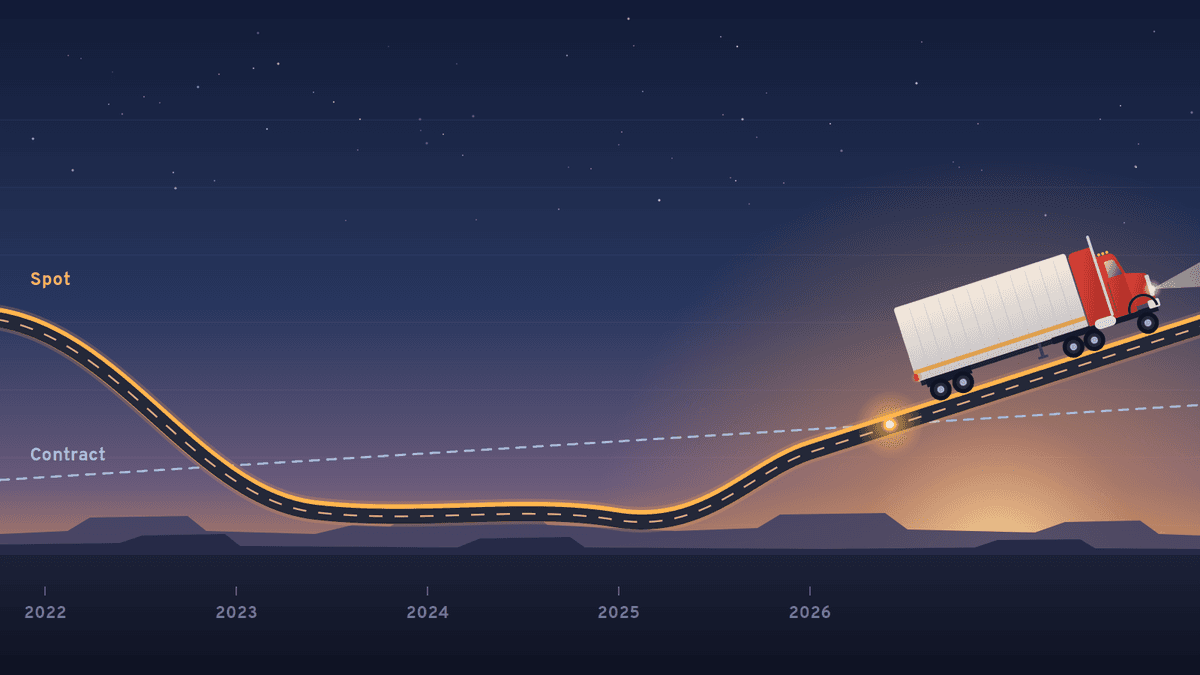
The trucking and freight industry is expected to see a slow and steady increase in freight rates — with a projected increase of 2% – 5% in 2026. This is expected to occur as the industry moves away from a freight recession and toward a more stable position. Key elements of this projected rate increase include tightening capacity pushed by freight carrier exits and increased spot rates, with contract rates expected to follow suit.
Factors That Impact Freight Rate Forecasts in 2026 and Beyond
Freight rate forecasts are exactly that — and like weather forecasts — there are multiple variables and factors that influence that forecast, and those factors are subject to change that influences the final prediction. For freight carriers, these factors that have a direct impact on freight rates can include mode-specific changes, industry capacity and demand, driver wages, and other external pressures.
Here is a closer look at the many factors that will impact the freight rate forecast in the next year and beyond:
- Industry Capacity: The loss of many smaller freight carriers in the industry is reducing the truck surplus and has set the stage for sharp rate increases as supply and demand are rebalanced.
- Increased Operational Costs: Non-fuel expenses like labor and insurance have increased the average cost per mile to $2.26, leading to a higher floor for base rates to ensure freight carrier profitability.
- Volatile Fuel Prices: Diesel fuel prices are averaging around $3.81 per gallon and even minor geopolitical or refinery-driven price changes add immediate per-mile costs that lead to more dynamic fuel surcharges.
- Last-Mile Rate Increases: Last-mile shipping accounts for 53% of total shipping costs and the final mile remains a primary factor of rate increases due to urban congestion and new green delivery zones.
- Technology and Risk Management: AI safety tech and telematics provide increased visibility of cargo and are now required to lower insurance premiums and secure high-paying contracts.
- Future EPA Regulations: Many fleets are rushing to purchase current equipment now before stricter, costlier emissions standards take effect in 2027. This keeps capital costs and base rates at higher levels.
- Regulatory Compliance: The permanent costs due to carbon pricing and fuel mandates are being baked into base freight contracts, which creates a higher floor for long-term rates.
- Manufacturing and Trade Shifts: Trade tariffs and trade agreements have shifted more manufacturing to North America that has resulted in rerouted freight lanes and increased demand and drayage costs in specific shipping hubs.
- Labor and Language Barriers: Stricter driver qualifications and an aging workforce act as a ceiling for fleet growth, limiting increases in capacity for many freight carriers even as demand rises.
How Supply-Driven Scarcity Impacts Freight Rates for Small Carriers
Supply-driven scarcity is a reality for small freight carriers that is characterized by driver shortages, delays in purchasing new equipment, and increased operational costs. These shortcomings all have a more profound impact on smaller freight carriers than their larger competitors and force small carriers to tighten capacity and force shippers to pay higher rates. This reality makes it more difficult for a smaller carrier to capitalize on any market highs.
Here is a closer look at specific ways that small freight carriers are affected by supply-driven scarcity:
Limited Capacity and Rate Spikes
Small freight carriers make up an estimated 91.5% of the industry and when supply-driven scarcity prevents carriers from expanding their business, it results in reduced overall capacity. This, in turn, leads to increased rates when the demand is high, and gives smaller carriers the ability to command higher spot rates.
Pressure of Higher Operational Costs
When operational costs — insurance, fuel, equipment, and wages — increase across the board in the industry, it impacts small freight carriers more than their larger competitors. This means that even when demand and rates increase, smaller carriers cannot always capitalize.
Equipment Upgrades Delayed
The increased costs of equipment in the trucking and freight industry paired with an uncertain economy have forced many smaller carriers to keep and maintain older equipment for longer. This contributes to higher maintenance costs, reduced efficiency, and an increase in potential downtime.
Volatile Spot Rates
Small freight carriers are more reliant on industry spot rates than their larger counterparts that will often benefit from contract rates. This means that small carriers are more heavily impacted by rapid fluctuations in supply and demand.
Key Metrics and Benchmarks for Small Freight Carriers
When freight rates increase or decrease, it has a profound impact on small freight carriers — which makes it critical for carriers to monitor Key Performance Indicators (KPIs), metrics, analytics, and benchmarks. These data points can provide incredible insight into freight operations and allow you to make data-based decisions. By carefully monitoring key metrics and analytics, and setting benchmarks for your company, you can better manage your finances when freight rates are more volatile.
Here is a better look at important financial and operational metrics that small freight companies may want to monitor with important benchmarks to aim for:
Key Financial Metrics and Benchmarks in Trucking
- Operating Ratio (OR): This metric measures how much of your revenue goes toward operating expenses. A healthy benchmark for small freight carriers is 90% to 92%, with anything below 88% considered very good.
- All-In Cost Per Mile (CPM): Cost per mile measures the sum of all fixed and variable costs for each mile driven. The 2026 industry benchmark for small fleets is $1.47 – $1.89 per mile, although carriers with fully-loaded cost models often see a floor of $2.26.
- Revenue Per Mile (RPM): This is the total revenue earned per mile driven. Your goal should be a spot rate of at least $2.32 – $2.40 for dry vans or $2.90 for refrigerator trucks to maintain a sustainable profit margin.
- Deadhead Percentage: This key metric tracks the percentage of total miles driven without a paid load. The industry average sits at 20% – 25%, but a good target should be 10% – 15% to avoid bleeding profits on empty miles.
- Maintenance Cost Per Mile: This covers the total costs of both scheduled and emergency repairs for fleet vehicles. The benchmark for most carriers is $0.12 – $0.18 per mile — and exceeding $0.20 per mile can indicate a need for new equipment.
Key Operational Metrics and Benchmarks in Trucking
- On-Time In-Full (OTIF): This metric measures the percentage of shipments that arrive both on schedule and with all items accounted for, and a good benchmark for general freight is 95%.
- Asset Utilization: This is the percentage of available hours your equipment is actually moving cargo. A healthy target is 65%–75% for most freight carriers. Exceeding 85% can lead to deferred maintenance and driver burnout, while going below 55% suggests a company is over-fleet.
- Driver Turnover Rate: The percentage of drivers who leave your company within a year is your driver turnover rate. Large carriers may see driver turnover rates above 90%, but small fleets should target driver turnover below 30%.
- Average Fuel Efficiency (MPG): This metric measures the distance traveled per gallon of fuel. The industry average is 6.8 MPG — but small carriers focused on efficiency should aim for above 7.0 MPG if possible.
- Dwell Time: Dwell time tracks the total duration a truck spends at a facility, from the moment a truck enters a facility to the moment it leaves. Your goal should be an average of under 120 minutes. By reducing dwell time by just 15% across a fleet, carriers can unlock additional capacity and add an extra load per week per driver.
- Empty Mileage Percentage: The percentage of total miles driven without a paying load is critical for small freight carriers. The industry struggles with rates above 20%, but high-performing small carriers can use load-matching technology to keep this metric below 10%.
Tech Features to Cut Costs for Small Freight Carriers
A comprehensive and cloud-based Transportation Management System (TMS) — like TenTrucks TMS — provides innovative tech features that can help small and medium freight carriers cut costs and improve profits when freight rates increase. Valuable tools for small freight carriers include route optimization software, digital load boards, rate benchmarking and analytics, and Electronic Logging Devices (ELDs). With these tools integrated into your Transportation Management System, you can reduce costs, improve efficiency, and drive success.
Route Optimization Software
Route optimization software helps freight carriers take advantage of the most efficient routes for trucks, avoiding traffic congestion, road construction, and extreme weather. By implementing route optimization software, freight carriers can improve fuel efficiency and reduce operational costs.
Digital Load Boards
Transportation Management Systems that provide freight carriers with digital load boards will allow fleet managers to see and monitor freight rates and market demands in real time. This helps smaller freight carriers find the most profitable loads and drive financial success.
Rate Benchmarking and Analytics
Many platforms provide freight carriers with the ability to benchmark freight rates and monitor key analytics. Rate benchmarking provides a clearer picture of lane-level spot rates that are supported by valuable analytics and data.
Electronic Logging Devices (ELDs) and Telematics
Freight carriers can keep a close eye on fleet vehicles and cargo with Electronic Logging Devices and telematics solutions integrated with a TMS platform. Real-time visibility allows carriers to better track fuel use, driver performance, and idle time, which contributes to improved efficiency.
READ MORE: How Trucking Companies Can Boost Profitability
Increased freight rates can have a significant impact on trucking and freight companies — which is magnified for small freight carriers. TenTrucks wants to help small and medium carriers plan for the future with this overview of what small carriers need to know about freight rates in 2026.
Contact TenTrucks today and schedule a demo of our TenTrucks TMS platform!