Electronic Logging Devices (ELDs) are a requirement for trucking and freight companies — but it is important that companies do not discount the benefits of ELDs. ELDs provide companies with the ability to automatically record key pieces of data, monitor vehicle diagnostics, track shipments with GPS capabilities, and more. Freight companies that are taking a deeper look at ELDs and their capabilities may be asking — how does ELD tracking improve load management and visibility — and TenTrucks may be able to help answer this question and more.
6 Ways Real-Time ELD Data Improves Visibility and Load Management
A key element of Electronic Logging Devices is their ability to provide real-time tracking data for dispatchers to monitor. This level of real-time visibility benefits freight companies in a variety of ways, from allowing dispatchers to better allocate resources and plan future loads to providing customers with more accurate ETAs that can enhance customer satisfaction.
Freight companies looking to improve real-time tracking may want to focus on better ELD implementation and data-driven efficiency for fleet operations. This overview serves as a valuable resource for understanding how real-time ELD load tracking can transform your day-to-day operations.
Here is a closer look at how real-time ELD data can improve your freight operations:
1. More Precise Real-Time Location Data
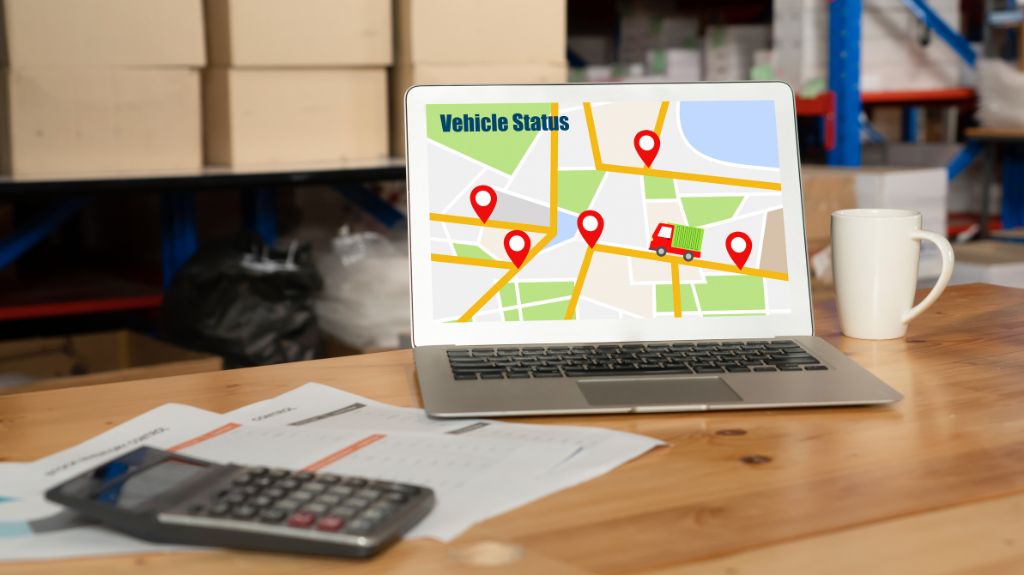
ELDs integrated with your Transportation Management System (TMS) provide freight companies with live location data. This gives freight dispatchers and customers the ability to monitor shipments and establish more accurate arrival times for cargo. The benefits of real-time data in this scenario are two-fold — they minimize the need for manual check-in calls and provide transparency for customers that can lead to stronger customer-carrier relationships.
2. Improved Load Management with HOS Visibility
Truck driver Hours of Service (HOS) play an important role in how loads are managed and how resources are allocated for freight companies. When a driver has met his limit, a dispatcher may have to pivot to a different driver who has the capacity to haul additional cargo. With the real-time visibility and HOS tracking provided by an ELD, dispatchers can more effectively match loads to drivers with the time and capacity to handle them, minimizing the risk of compliance violations and preventing potential load delays for customers.
3. Reduced Detention Time
The time fleet trucks are not on the road and hauling cargo is time that is wasted, productivity lost, and money lost. That time includes detention time when a truck is stuck at a facility, waiting to be loaded or unloaded. Detention time can be a major drain on the bottom line for freight companies, with data suggesting that detention time costs a facility between $15,000 and $35,000 per year.
| Detention Time Metrics | Estimated Costs |
|---|---|
| Average Hourly Rate for Standard Trucks | $50 – $100 Per Hour |
| Average Hourly Rate for Specialized Trucks | $125 – $150 Per Hour |
| Average Free Time | 2 Hours |
| Average Detention Time | 3.4 Hours |
The real-time tracking data provided by an ELD will help freight companies identify slow shippers and facilities that contribute to high detention times, and with this data, improve fleet efficiency to reduce detention time and improve profitability.
4. More Proactive and Predictive Maintenance
Truck downtime costs freight companies time and money — and a more proactive maintenance schedule can mitigate the risk of unnecessary downtime for fleet vehicles. ELDs have the capability to monitor key engine diagnostics, mileage, and hours of service in real-time to help you better track and schedule regular maintenance for vehicles.
Industry data indicates that a dollar spent on preventative maintenance can save a company $4 – $8 in emergency repairs down the road and reduce downtime costs. Here is additional data points that are tied to regular fleet maintenance:
- Cost of Unplanned Downtime: Unplanned downtime costs between $448 and $760 per vehicle per day.
- Reduced Breakdowns: Fleets with structured preventative maintenance programs and regular maintenance schedules see 30% – 40% fewer unplanned breakdowns.
- Increased Vehicle Lifespan: Regular planned maintenance extends fleet vehicle lifespan by 15% – 20%.
With more proactive and predictive maintenance, trucking companies can prevent breakdowns and reduce unexpected downtime.
5. Reduce Empty Miles with Route Optimization
Route optimization software is a must-have feature for Transportation Management Systems that when paired with ELD capabilities have the potential to reduce the amount of empty miles driven by fleet vehicles.
Empty miles have a tremendous impact on company profits, and the average cost-per-mile data for freight companies can provide a better understanding of this data. Data provided by the American Transportation Research Institute (ATRI) outlines the average cost-per-mile for trucking companies, and when a truck drives empty miles, the company still pays full operating costs without making any money.
Here is a breakdown of the average cost-per-mile for trucking companies:
| Cost Component | Cost Per Mile |
|---|---|
| Driver Pay and Benefits | $1.00 |
| Fuel Costs | $0.60 – $0.70 |
| Equipment Payments | $0.33 – $0.39 |
| Repair and Maintenance | $0.20 |
| Insurance and Permits | $0.15 |
| Total Cost | $2.26 |
| Potential Lost Revenue | $2.50 – $3.50 |
| Empty Mile Cost | $4.76 – $5.76 |
Real-time location data provided by ELDs and combined with weather and traffic information allows dispatchers to re-route shipments to avoid traffic, minimize potential delays, reduce empty miles, and improve fuel efficiency — which all have an impact on profitability.
6. Reduced Risk of Compliance Errors
Violations of Department of Travel (DOT) regulations can result in fines that range from $1,000 to $16,000 per offense — and more serious penalties are possible for freight companies that falsify logs with fines up to $30,000. Electronic Logging Devices automatically log a lot of the information and data that is relevant to these compliance regulations. This eliminates the risk of human error with driver logs and can be used to improve driving behavior with continuous monitoring of driver performance.
READ MORE: What Is the ROI for ELD Integrations for Trucking Companies?
Freight companies may have questions about the capabilities and benefits of required Electronic Logging Devices. Questions like — how does ELD tracking improve load management and visibility? We hope that his overview created by the TenTrucks Team has answered your questions.
Contact TenTrucks today for more information on our TenTrucks TMS platform and TenTrucks 24/7 dispatching service!