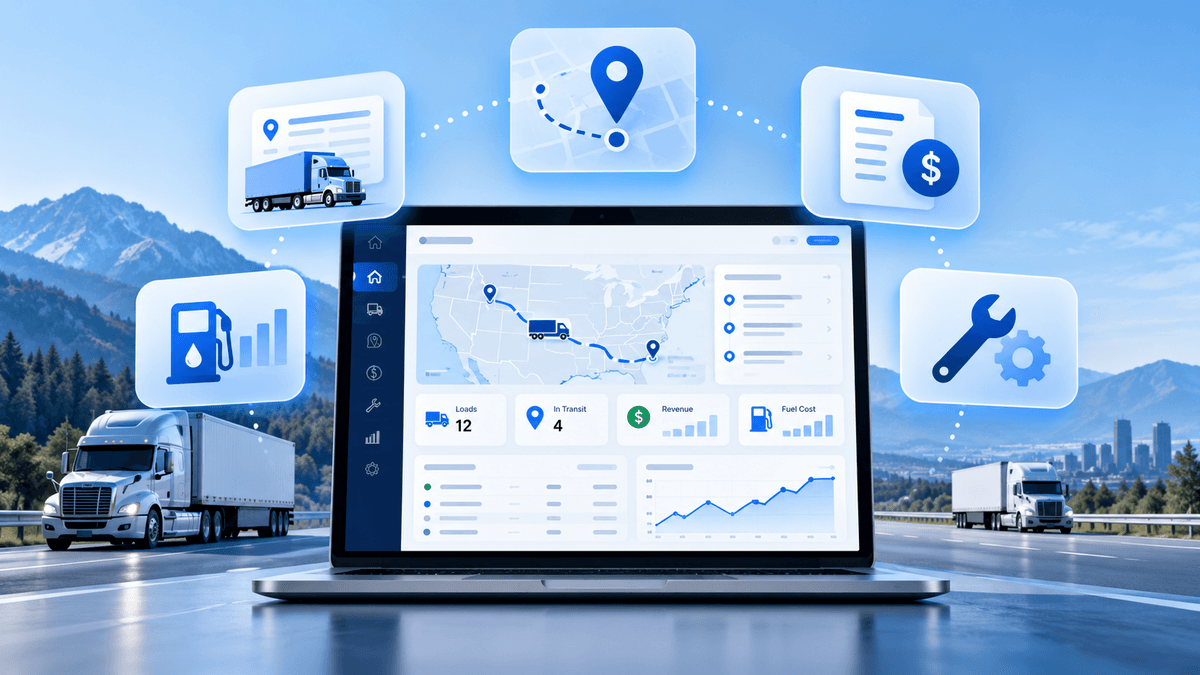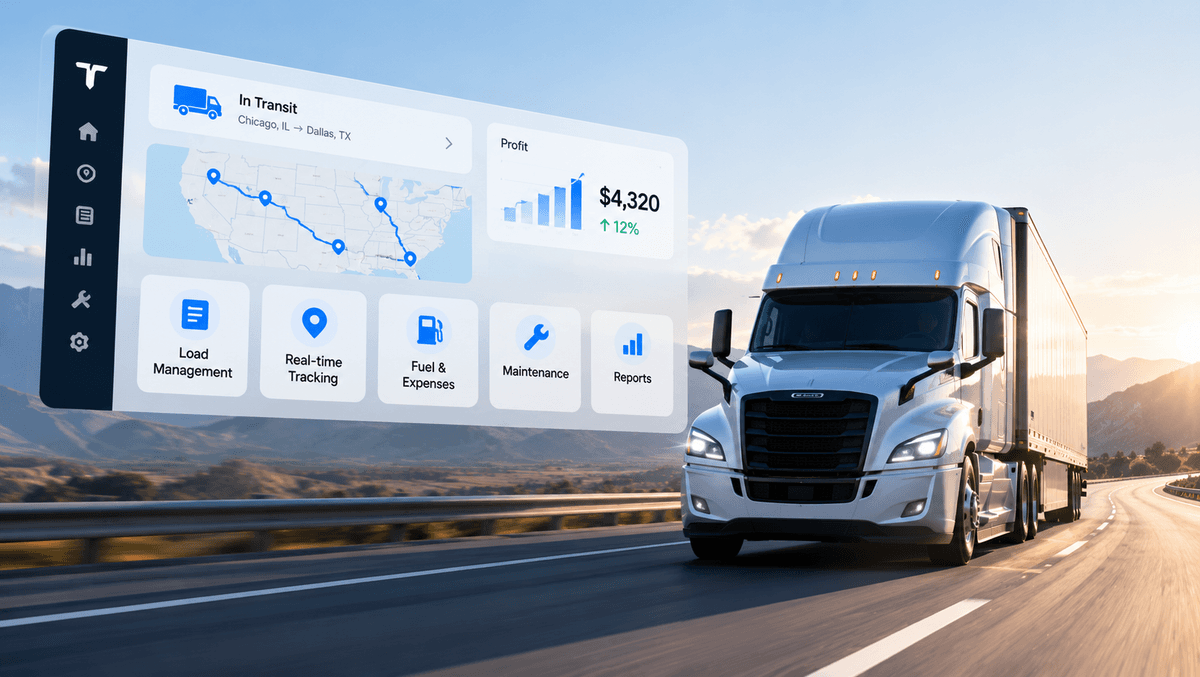
The role of Transportation Management Systems (TMS) in the trucking industry has changed — moving from record keeping to predictive analytics and proactive fleet management. The technology that powers TMS platforms continues to develop and as new innovations emerge, the role of Transportation Management Systems will continue to evolve, making it important to look at how TMS software is changing. TenTrucks is here to provide you with a glimpse into the future of the trucking industry and Transportation Management Systems with this list of the Top 10 TMS Software Trends for 2026.
Future Trends for TMS Software in 2026 and Beyond
Where does Transportation Management Software go from here?
Transportation Management Systems and the software that powers them continue to grow, develop, and evolve. The addition of Artificial Intelligence (AI) to TMS platforms has augmented the capabilities of these innovative solutions and will continue to do so as more and more tech companies research and implement AI.
As we move forward into 2026 and beyond, the trucking industry is expected to see a definitive shift from reactive systems to predictive platforms. AI will no longer just be a bolt-on feature for reporting and will become an operational layer capable of autonomous decision-making — from negotiating carrier rates to rerouting fleets in real-time. These advancements will be complemented by moves from more traditional software applications like Electronic Data Interchange (EDI) to more modern, advanced solutions like Application Programming Interfaces (API).
Here is a glimpse at what you can expect to see with TMS software in the future:
1. Increased Adoption of AI Agents
Many current TMS platforms use AI as a tool to provide additional information on fleet operations — not make decisions. Next-generation platforms are expected to adopt and implement AI Agents that will independently and autonomously make key decisions about fleet management — like scheduling appointments, choosing routes, and negotiating rates.
2. AI-Powered Fleet Operations
The continued development of AI in the trucking industry has led to a change from a tool that provides key pieces of data and recommendations to a tool that can actively optimize workflows by automating carrier selection and invoice reconciliation.
3. Move From EDI to API
A growing trend in the freight industry is the move from Electronic Data Interchange (EDI) integrations to Application Programming Interface (API) integrations that provide improved access to real-time carrier rates, shipment statuses, carrier onboarding, and more.
4. Focus on Sustainability and Emissions
The sustainability and environmental impact of trucking is expected to be a focal point of TMS software platforms moving forward with many next-gen platforms offering the capability to provide companies with emissions scores and eco-routes that reduce emissions and fuel use.
5. Hyper-Integration with WMS and ERP Platforms
The trucking industry is expected to see an increased focus on hyper-integration of key systems. The ability of Transportation Management Systems to seamlessly integrate with Warehouse Management Systems (WMS) and Enterprise Resource Planning (ERP) platforms in an effort to provide end-to-end supply chain visibility for trucking and freight companies will be a focal point in the future.
6. Increased Implementation of Digital Twins
What will happen the next time there are economic sanctions or tariffs? Digital Twins may be able to provide answers for trucking companies. A Digital Twin is a virtual replica of a Transportation Management System or trucking fleet that allows you to run simulations and predict the future of your company when faced with new challenges in the trucking industry.
7. Incorporation of EV Truck Management
All-electric commercial trucks are expected to become more and more prevalent in the future and Transportation Management Systems are expected to evolve to provide additional insight and analytics on EV truck management with charge management capabilities that will plan routes based on charging needs.
8. Increased Cybersecurity for Connected Fleets
The continued drive towards connectivity between TMS platforms, ELDs, driver apps, and cloud-based platforms has made cybersecurity even more critical. Next-generation TMS software is expected to incorporate advanced fraud detection to prevent double brokering and identity theft.
9. Increased Focus on the Driver Experience
Driver turnover continues to be a real challenge for trucking and freight companies each year, and we expect to see an increased focus on the driver experience with updated TMS software that provides digitized pre-trip checks, automated pay tracking, wellness monitoring, and TMS Mobile Driver Apps.
10. Hyper-Specific Logistics Models
The trucking industry is expected to move away from “one-size-fits-all” TMS platforms to more hyper-specific logistics models that are dedicated to different sectors of the industry. Examples include TMS platforms that are dedicated to refrigerated transport companies or platforms that are specific to last-mile delivery trucking companies.
READ MORE: When Is It Time to Upgrade Your Transportation Management System?
Are you interested in what the future of the trucking industry and Transportation Management Systems looks like? We may be able to answer some of your questions with this list of the Top 10 TMS Software Trends for 2026 created by the TenTrucks Team.
Contact TenTrucks for more information on our Transportation Management System platform!