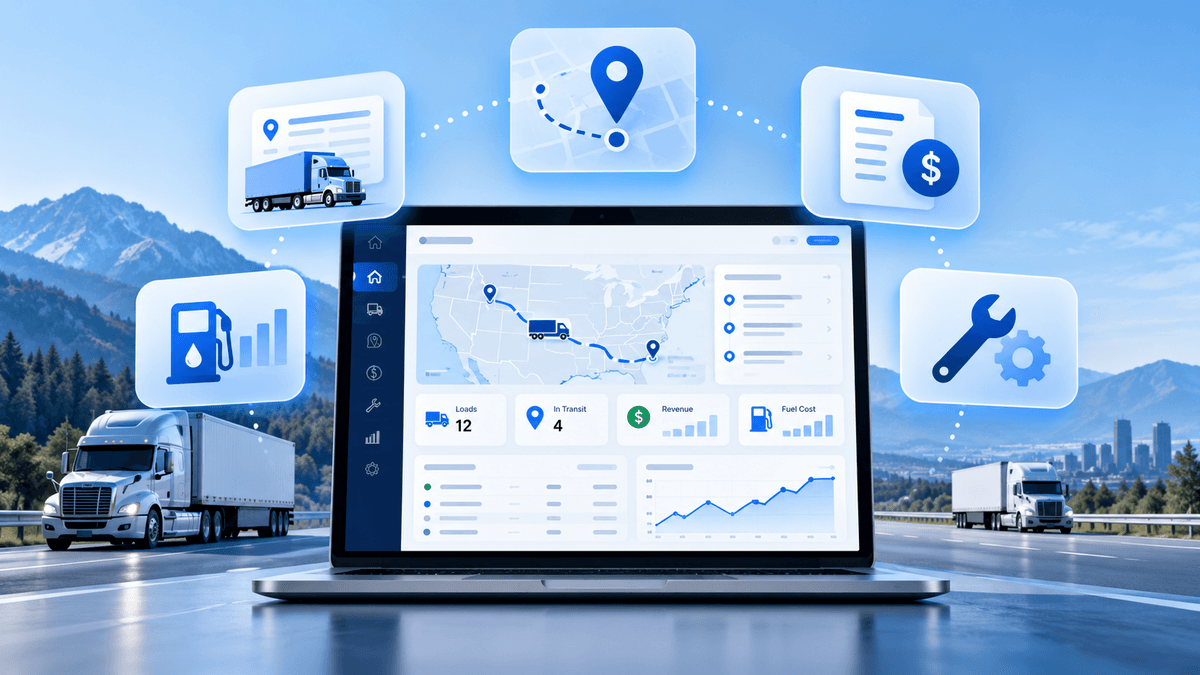
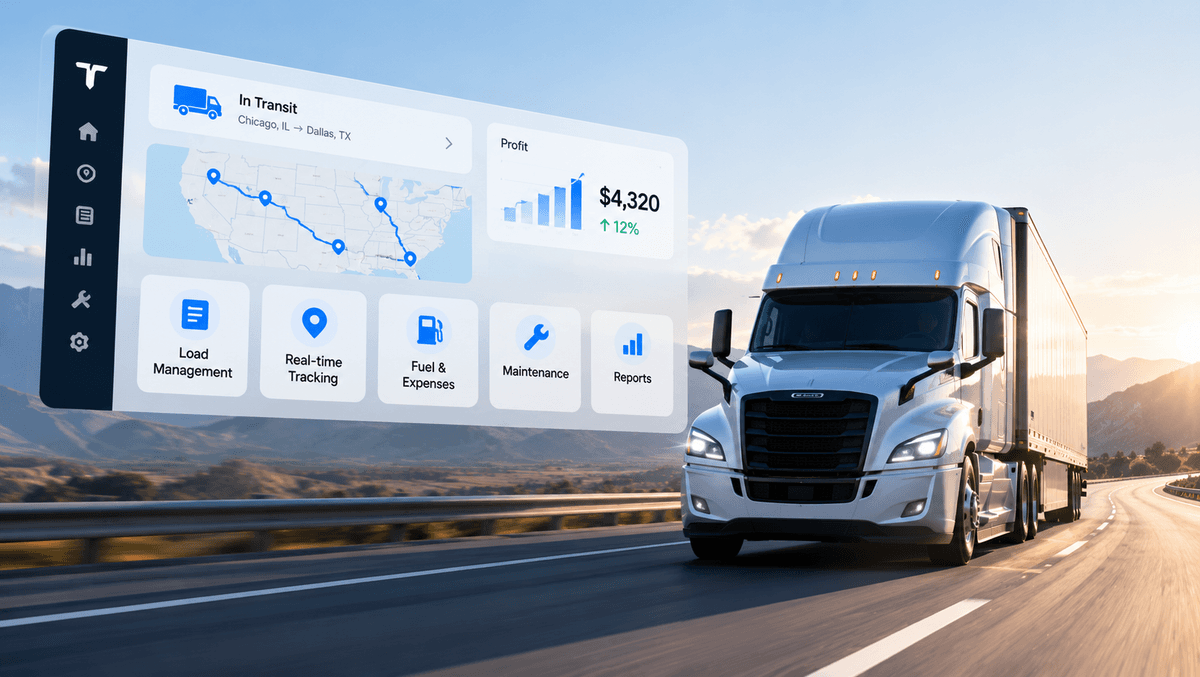
Quick Answer: Self-dispatch is when a small fleet owner books loads, assigns them to drivers, and manages the back office themselves, using software instead of hiring a dispatcher or paying an outside dispatch service. For carriers running 1 to 5 trucks, self-dispatch with a connected platform is the most cost-effective option in 2026. It removes the 5 to 10 percent of gross revenue that outside dispatch services charge and avoids the cost of a full-time hire. The trade-off is that the owner stays close to the operation, and the software has to handle load booking, ELD-aware dispatch, and settlements in one workflow.
In this guide you’ll learn:
- What self-dispatch actually means for a small fleet
- The cost math for self-dispatch versus a dispatcher or dispatch service
- The three pillars of a working self-dispatch system
- How to run a 1 to 5 truck operation step by step
- When to move beyond self-dispatch as you grow past five trucks
What Is Self-Dispatch?
Self-dispatch is the operating model where the fleet owner sources loads, negotiates rates, assigns trucks, manages drivers, and runs the back office personally, using software to handle the parts that used to require people.
The model is the opposite of two alternatives small carriers often default to: hiring an in-house dispatcher, or outsourcing to a third-party dispatch service that takes a percentage of gross revenue. Self-dispatch keeps both the control and the margin with the owner, and shifts the heavy lifting onto a platform that automates rate confirmation parsing, multi-truck visibility, and settlements.
Self-Dispatch vs. Hiring a Dispatcher vs. Using a Dispatch Service
For a 1 to 5 truck operation, the choice usually comes down to three paths. Here is the practical comparison:
| Option | What it costs | What you get | Best for |
|---|---|---|---|
| Self-dispatch with software | A few hundred per month in software | Full control, full margin, all data in one place | Owner-operators and fleets of 1 to 5 trucks |
| Hire an in-house dispatcher | Roughly $50,000 to $75,000 per year all-in | A dedicated person who handles dispatch and broker calls | Fleets of 5 trucks and up, growing past owner involvement |
| Outside dispatch service | 5 to 10 percent of gross revenue, ongoing | Loads booked for you, less time spent on broker calls | Operators who want zero involvement in load sourcing |
For a typical 3-truck fleet grossing around $90,000 per month, an outside dispatch service at 7 percent costs about $75,000 per year. Self-dispatch software costs a fraction of that and keeps the rest of the margin in the business. Once you grow past 5 trucks and the dispatch workload exceeds the owner’s bandwidth, hiring becomes the right next step.
When Should a Small Fleet Self-Dispatch?
Self-dispatch fits when three conditions are true:
- You want to keep the margin. A 5 to 10 percent dispatch fee on every load is real money. On six figures of gross revenue, it pays for software many times over.
- You can spend two to four hours a day on operations. Self-dispatch is not zero work. It is concentrated work that software shortens. If you cannot give it daily attention, an outside service may fit better.
- You have, or are willing to learn, broker relationships. Self-dispatch means you call the brokers. That is also where the best rates live.
If those three are true and you run 1 to 5 trucks, self-dispatch is almost always the more profitable path.
The 3 Pillars of a Small Fleet Self-Dispatch System
A working self-dispatch system unifies three operations into one workflow:
Centralized load booking → Multi-truck operations → Payment tracking
When any one of these breaks, the whole system slows down. Here is what each pillar requires.
1. Centralized Load Booking With AI Rate Confirmation Parsing
When three trucks are sitting at three different receivers waiting for their next load, you cannot spend an hour retyping each broker rate confirmation into a spreadsheet.
A real self-dispatch system uses AI to read the rate confirmation PDF and build the dispatch automatically. You forward or upload the document, and the system pulls pickup and drop-off times, addresses, commodity, and rate, ready to assign to a driver. Manual transcription disappears.
2. Multi-Truck Fleet Visibility With ELD Integration
You need one screen showing where every asset is, who is driving, and how many Hours of Service each driver has left.
A self-dispatch platform must integrate with your drivers’ ELDs. Without that, you risk the classic mistake: booking a hot load for Truck 3, only to realize the driver is out of hours and stranded 100 miles from the pickup. ELD-aware dispatch prevents that error before the load is offered.
3. Clear Payment Tracking and Driver Settlements
With 1 to 5 trucks, every dollar in motion has to be visible. You need to know where every load is in the cash flow lifecycle at any time:
- Unbilled: load delivered, POD not yet processed
- Invoiced and pending: invoice sent to broker or factor, awaiting payment
- Settled: money received, fuel advances and factoring fees applied, driver pay calculated and queued
The same system that books the load and tracks the driver should be calculating driver settlements automatically by mile, percentage, or flat rate.
Manual Setup vs. Automated Self-Dispatch
If you are running 1 to 5 trucks on spreadsheets and texts, here is how the day-to-day compares:
| Workflow | Fragmented stack (spreadsheets, texts, apps) | Connected self-dispatch platform |
|---|---|---|
| Load assignment | Texting or emailing rate confirmations to drivers; tracking who got what in notes | One-click assignment after AI parses the rate confirmation; load lands on the driver’s phone |
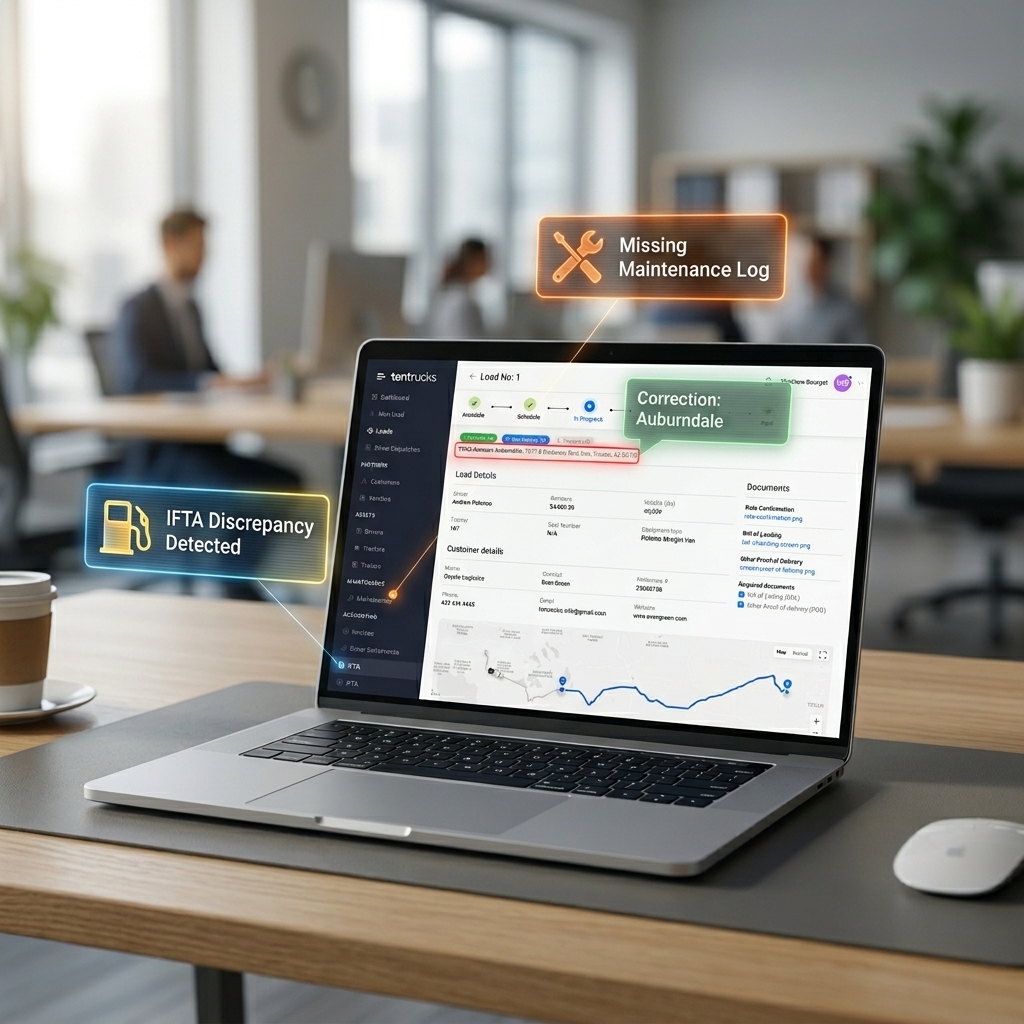
| IFTA reporting | Pulling mileage from multiple ELDs and matching fuel receipts by hand | Multi-truck ELD and fuel card data feed into automated quarterly filings |
| Invoicing | Waiting for drivers to send POD photos, then drafting each invoice manually | Driver uploads POD via the app; the invoice is built and ready to send |
| Driver settlements | Calculating per-mile or percentage pay for each driver every week | Settlements calculate automatically from completed loads |
| Profitability view | Guessing which truck is making money until month-end | Live per-truck and per-lane margin in the dashboard |
The difference is hours per day saved, plus errors caught before they reach the invoice.
How to Self-Dispatch a 1 to 5 Truck Fleet With TenTrucks
“If your system makes you touch the same piece of data three times, from booking to dispatch to billing, you do not have a system. You have a second full-time job.”
Here is how a lean fleet owner runs a working self-dispatch operation.
Step 1: Set Up Your Dispatch Control Center
Whether you drive one of the trucks yourself or run the fleet from a home office, the TenTrucks dashboard becomes your tower. You scout load boards, work the brokers, negotiate the rate, and forward the final confirmation into the platform. The AI builds the load profile for you.
Step 2: Assign Loads in One Click
Assign the load to the right driver. The pickup numbers, addresses, contact details, and broker-specific instructions land directly on the driver’s phone in the TenTrucks driver app. No phone tag, no misread addresses, no missed appointment windows.
Step 3: Move Cash Through the Pipeline Fast
When the driver completes the delivery, they scan the signed POD on the app. The platform attaches the document to the pre-filled broker invoice. Review, submit to the factor or the broker, and the cash flow keeps moving instead of waiting on paper.
Step 4: Watch Profitability by the Asset
The ledger tracks revenue minus fuel, tolls, driver pay, and maintenance for each truck. You see which units and which lanes are making money in real time, not at month-end close.
The Real ROI of Self-Dispatch: A 3-Truck Example
Here is a realistic year for a self-dispatched 3-truck fleet earning around $90,000 per month:
| Line item | Outside dispatch service (7%) | Hire a dispatcher | Self-dispatch with software |
|---|---|---|---|
| Annual cost | About $75,600 | About $50,000 to $75,000 | A few thousand per year |
| Margin retained on dispatch | 93 percent of gross | All of it, minus salary | All of it, minus software |
| Owner time required | Low | Low | Two to four hours per day |
| Control over rates and lanes | Limited | Shared with dispatcher | Full |
The savings from skipping the percentage fee on every load is the cleanest, largest single margin lift available to a 1 to 5 truck operation. The trade-off is the owner’s daily time, which is exactly what a good self-dispatch platform compresses.
When to Move Beyond Self-Dispatch
Self-dispatch fits 1 to 5 trucks well. Past that, the math changes.
Once the fleet grows past 5 trucks, the dispatch workload usually exceeds what the owner can carry alongside everything else. That is the right time to either hire an in-house dispatcher or move into a fleet management workflow where multiple dispatchers share the load. The platform should grow with you: the same TenTrucks dashboard that ran your 3-truck self-dispatch operation runs the 5-to-50 truck fleet on the other side of the transition.
Frequently Asked Questions
What is self-dispatch? Self-dispatch is the operating model where the fleet owner books loads, assigns drivers, and runs the back office themselves, using software to automate the work that used to require a person. It is the alternative to hiring a dispatcher or paying an outside dispatch service.
When should a small fleet self-dispatch instead of hiring a dispatcher? Self-dispatch usually fits below 5 trucks. The combined cost of a dispatcher’s salary, benefits, and workspace is hard to justify on the gross of one to five trucks. Once the fleet grows past 5 trucks, the dispatch workload typically warrants a hire.
How much does an outside dispatch service cost? Outside dispatch services typically charge 5 to 10 percent of gross revenue per load. On a 3-truck fleet grossing around $90,000 per month, that is roughly $54,000 to $108,000 per year.
Can a 3-truck fleet really self-dispatch effectively? Yes. With a connected platform that parses rate confirmations, integrates with ELDs, and automates settlements, one owner can manage 3 to 5 trucks comfortably. The software does the work that used to require a dispatcher.
Do I need software to self-dispatch? Technically no, but practically yes. Self-dispatch by spreadsheet and text message breaks down around the second or third truck. A platform that unifies booking, dispatch, ELD visibility, invoicing, and settlements is what makes the model work at scale.
What is the difference between a dispatch service and dispatch software? A dispatch service is a third-party company that books loads for you and takes a percentage of gross revenue. Dispatch software is a platform you use to book and manage loads yourself. The service replaces your time. The software shortens it.
How do I find loads when I self-dispatch? The standard mix is load boards (DAT, Truckstop, and others), direct broker relationships, and shipper relationships. As you self-dispatch over time, broker relationships compound and become the most profitable source of loads.
What is AI rate confirmation parsing? AI rate confirmation parsing reads the PDF or document a broker sends and automatically extracts pickup and drop-off times, addresses, commodity, and rate. The data lands in your dispatch system without manual typing, which removes the largest source of small-fleet data entry.
How do I track multiple drivers’ Hours of Service across a small fleet? The fleet’s ELD data has to feed your dispatch system. A self-dispatch platform that integrates with ELDs shows live HOS for every driver in one view, so you do not assign a load the driver cannot legally finish. See how ELD compliance has changed in 2026 for the broader context.
How do I handle invoicing across multiple trucks? A connected platform builds each invoice automatically when the driver uploads the POD, pre-fills broker-specific details, and routes the invoice to your factoring company or direct to the broker. Same-day invoicing is the standard, not the exception, on a working self-dispatch setup.
What happens to my self-dispatch setup when I grow past 5 trucks? A good platform scales with you. The same TenTrucks dashboard that runs a 3-truck self-dispatch operation handles a 30-truck fleet with shared dispatchers. The workflow grows. The system stays.
Is self-dispatch a good idea for a brand-new trucking authority? Yes, for most new authorities. Self-dispatch keeps the margin intact during the cash-flow-fragile early months. The trade-off is the owner has to build broker relationships from scratch, which takes time but pays back permanently.
The Bottom Line
For a 1 to 5 truck fleet in 2026, self-dispatch is almost always the most profitable operating model. It keeps the margin that outside dispatch services would take, and avoids the cost of an early hire that the fleet may not yet support. The honest cost is the owner’s daily time, which is exactly what a connected platform shortens.
A self-dispatch setup is only as good as the system underneath it. Load booking, ELD visibility, invoicing, and settlements have to work as one flow. When they do, a small fleet runs lean, fast, and clean.
Start your free trial of TenTrucks and run your 1 to 5 truck operation from one dashboard, with AI handling the data entry.
Sources and References
- Industry pricing patterns for trucking dispatch services and dispatcher compensation
- TenTrucks product documentation: TMS, dispatch, ELD, settlements, invoicing, and IFTA features
- FMCSA Hours of Service rules for multi-driver operations
Cost figures reflect industry-typical ranges and will vary by region, lane mix, and operation. Verify current TenTrucks plan details at tentrucks.com/tms#pricing.
About TenTrucks
TenTrucks is an AI-powered fleet operations platform for owner-operators and fleets of 1 to 50 trucks. It combines TMS and dispatch, ELD and compliance, automated IFTA, settlements, invoicing, and a mobile driver app in one system. For carriers growing past 5 trucks, the platform scales into mid-size fleet operations on the same dashboard.