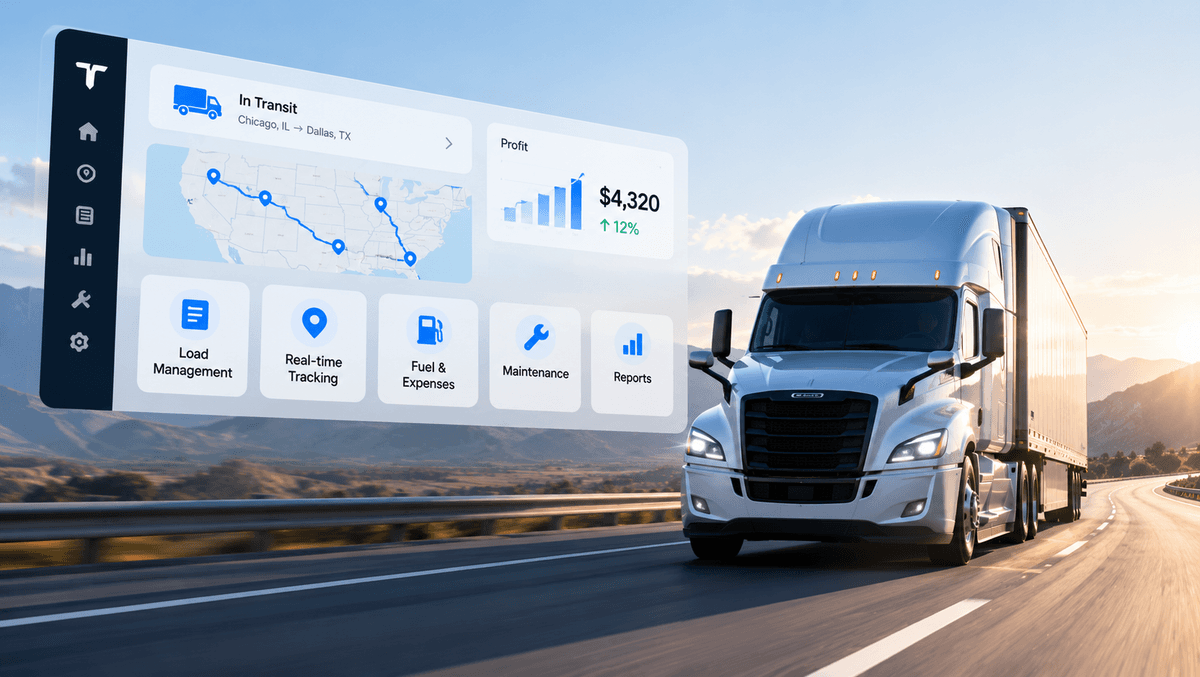
Driver turnover remains a major challenge for freight carriers across North America. Larger, enterprise freight carriers have an average driver turnover rate of more than 90% — while smaller freight carriers see an average driver turnover rate between 50% and 70%. A lower turnover rate for smaller freight carriers may feel like a competitive advantage on the face of it — but for freight carriers that employ 10 or fewer trucks, that turnover rate still has a tremendous impact on many companies. TenTrucks wants to help smaller freight carriers overcome this obstacle with a quick list of 5 Retention Programs That Work for Small Fleets in 2026.
READ MORE: How Does Fleet Management Software Help Reduce Driver Turnover?
Key Data and Statistics About Driver Turnover
There are many factors that impact driver turnover rates, including a difficult work-life balance for drivers, pay and benefits that can be stagnant, strained relationships with dispatchers due to poor communication, increased burnout and poor health issues due to a sedentary lifestyle, and day-to-day stress. Implementing viable driver retention strategies and understanding the data and statistics behind driver turnover is a good starting point.
- First 90 Days: Industry statistics have shown that 35% of new-hire drivers quit within the first 90 days of starting a new job, and 55% of new drivers leave within the first six months. This highlights the importance of early-stage support and onboarding for new drivers.
- Cost of Departure: Losing a driver can prove to be a hidden cost for freight carriers due to the high costs of replacing a driver. Replacing a single driver costs a small fleet between $8,234 and $20,729 when you take recruiting, screening, onboarding, and administrative exit costs into account.
- Revenue Lost: When you lose drivers, it means that you have trucks sitting empty and idle on your lot — not driving revenue. Every day a truck sits empty due to the lack of a driver, a small carrier loses between $800 and $1,200 in potential revenue that cannot be recovered.
- Aging Workforce: The truck industry suffers from an aging workforce that has a tremendous impact on driver retention. The average age of a truck driver in the industry is currently 47 years old, and the industry needs to recruit almost 1.2 million new drivers over the next decade to replace retirees and keep up with industry growth.
- Vanishing Workforce: Recent data revisions from 2026 revealed that over 122,000 driver positions previously counted as filled had effectively disappeared from payrolls since 2022, indicating a more significant labor deficit than initially estimated.
- Safety and Insurance: The constant churn of drivers in the industry leads to a reliance on less experienced replacements, which can result in a higher rate of inspection violations and a degradation of CSA (Compliance, Safety, Accountability) scores, driving up insurance premiums for smaller freight carriers.
Effective Driver Retention Strategies for Small Freight Carriers
Driver retention is critical to the success of small freight carriers and implementing an effective driver retention program can help reduce driver turnover that has a tremendous impact on those businesses. These driver retention programs can take many different approaches to the driver turnover challenge — including milestone pay structures and more flexible driver schedules.
With that in mind — there are key components that many successful driver retention programs have in common:
- Competitive and Consistent Pay: Pay and salary are driving factors behind high driver turnover, and programs that emphasize competitive pay and consistent miles can help improve retention.
- Work-Life Balance: Hours and days on the road can take a real toll on family life, and a successful driver retention strategy makes an effort to improve the work-life balance for drivers with flexible scheduling and reduced wait times.
- Reliable Equipment: There are few things that will frustrate drivers more than unreliable or unsafe equipment, and effective driver retention programs work to provide well-maintained equipment for drivers.
- Open Lines of Communication: Open communication can solve many issues for drivers that lead to turnover. Many successful retention strategies implement standard check-ins, surveys, and open-door communication policies.
- Employee Recognition and Development: Employees who are not recognized for the good work they do, or have no opportunity for development or advancement are much more likely to leave a company, and driver retention strategies that provide those things can reduce turnover.
- Proactive Support: Driver retention strategies that provide proactive support and comprehensive onboarding for drivers can help build trust and reduce driver turnover rates.
Here is a closer look at effective driver retention strategies for small fleets and freight carriers:
1. Performance-Based or Milestone Pay Structure
A competitive pay structure is an effective driver retention strategy that is ideal for small fleets and freight carriers, and can be based on performance metrics or career milestones. This method allows small freight carriers to increase driver pay based on tenure or performance with an established document without extensive involvement of Human Resources departments. A typical performance-based or milestone pay structure might increase pay by $0.25 per hour at 90 days with subsequent wage increases the longer a driver remains with a company and may include potential bonuses OR performance-based pay scales may rely on other driver metrics like fuel efficiency or on-time delivery rates to dictate wage increases.
Here is an example of how performance-based pay and bonuses might be applied to small freight carriers:
| Category | Milestone | Incentive |
|---|---|---|
| Tenure (Mileage) | 1-Year Seniority Increase | +$0.03 – $0.05 per mile |
| Tenure (Hourly) | 1-Year Seniority Increase | +$1.50 – $2.50 per hour |
| Tenure (Long-Term) | Annual Loyalty Raise | +$0.01 cpm or +$0.50/hr (Every year after yr 1) |
| Safety | Clean Level I, II, or III Inspection | $100 – $250 |
| Efficiency | Fuel Economy (Over 7.2 MPG) | $0.02 – $0.05 per mile |
| Reliability | 98%+ On-Time Delivery | $250 |
| Retention | Employment Anniversary | $500 – $1,000 |
| Productivity | Exceed 10,000 Miles/Month | $0.03 per mile |
| Compliance | Zero HOS or Log Violations | $150 |
2. Flexible Driver Scheduling
Implementing flexible or specialized driver scheduling is a proven and effective driver retention strategy for smaller fleets. Unlike larger fleets that may often have a business model based on volume, smaller fleets can provide more flexible scheduling for drivers with compressed work weeks or guaranteed home time. In addition — smaller freight carriers may be able to provide personalized scheduling for their drivers. These tactics improve the work-life balance for drivers and by extension improve driver retention.
3. Safe-Driver Incentives
Driver safety is paramount for any freight carrier — but may be even more important for smaller freight carriers. Not only is safety a key factor in driver turnover, safe-driver incentives are a proven method to improve driver retention. By implementing AI-powered solutions that can accurately track and score driver performance metrics without subjective feedback, small freight carriers can create safe-driver incentives or weekly bonus programs for high safety scores. This strategy also has the potential of improving overall driver safety and lowering insurance costs.
4. Driver Mentorship and Onboarding Programs
The first 90 days are critical to driver retention, and pairing new hires with an experienced driver within that timeframe as part of a comprehensive driver mentorship program is an effective strategy. A driver mentorship program paired with digital onboarding resources can create a more welcoming culture for new employees that makes them feel ready to hit the road after the first 90 days and like a part of the team.
5. Wellness and Support Programs
Freight carriers that retain drivers prove to those drivers that they care about their well-being, and driver wellness and support programs can play an integral role in driver retention. Freight companies that invest in modern, comfortable equipment and use predictive maintenance to reduce downtime will benefit from higher retention rates. In addition — freight companies that can provide in-cab comforts and provide mental health support will show that they care about their drivers and their well-being.
READ MORE: What Is the ROI for a Transportation Management System in Trucking?
Small freight carriers that are faced with high driver turnover rates may be looking for ways to improve retention — and TenTrucks may be able to help. This quick look at 5 Retention Programs That Work for Small Fleets in 2026 can help small freight carriers improve driver retention and drive success.
Contact TenTrucks today for more information on our TenTrucks TMS platform and its capabilities!