When criminals targeted Tanager Logistics last year, they didn’t break a single lock or pry open a single trailer. They didn’t have to. The scheme was cleaner than that.
According to Senate testimony from Tanager’s own founder, criminals first tendered a load to Tanager on behalf of a fake trucking company. Then they impersonated Tanager itself — using the real company’s name, MC number, and credentials — to broker those same loads (and others) to actual motor carriers. The carriers hauled the freight, delivered it, and waited for payment. Tanager’s phones started ringing with angry truckers demanding money for loads the real Tanager had never booked. The company’s reputation, built over years, was hijacked in days.
This isn’t an isolated story. According to Verisk CargoNet, estimated cargo theft losses surged to nearly $725 million in 2025 — a 60% increase from 2024. The American Transportation Research Institute pegs the average annual loss per carrier at $520,000, and reports that 75% of stolen cargo is never recovered. The American Trucking Associations says strategic theft has risen 1,500% since Q1 2021.
If you run 10 trucks or fewer — and 90% of trucking fleets do — you’re not adjacent to this problem. You’re the primary target.
Here’s why, and what to do about it.
The four most common freight fraud schemes in 2026
Modern freight fraud isn’t smash-and-grab. It’s organized, sophisticated, often international, and increasingly augmented by AI. There are four schemes you need to recognize on sight.
1. Double brokering. A fraudster poses as a legitimate carrier and accepts a load from a broker. Instead of hauling it themselves, they re-broker the load to a real carrier — often at a cut rate. The real carrier delivers, expects payment, but the fraudster has vanished with the broker’s money. The real carrier eats the loss. The broker gets sued.
2. Carrier identity theft / chameleon carriers. Criminals create a shell company using a stolen MC number, USDOT identity, or carrier credentials lifted from public FMCSA data. They book loads under the stolen identity, collect payment, and disappear. The real carrier (the Tanager scenario above) gets the angry phone calls and the wrecked reputation.
3. Fictitious pickups. A criminal poses as a contracted carrier, shows up at the shipper, takes the freight, and is never seen again. The shipper thinks the real carrier picked up. The real carrier never got the dispatch. The freight is gone.
4. Hostage loads. A fraudulent carrier accepts the load, picks it up, then refuses to deliver until additional payments are wired. The shipper or broker pays out of desperation. The freight gets delivered. The “carrier” disappears.
There’s a fifth category that didn’t exist three years ago: AI-generated documents. Fake rate confirmations, fabricated BOLs, doctored insurance certificates — produced in seconds by generative AI, indistinguishable from real ones at a glance. According to identity verification firm IDScan.net, ID fraud attempts in the U.S. cargo and logistics sector surged 213% over the past two years. That number is climbing, not falling.
Why small carriers are the primary targets
You’d think fraudsters would chase enterprise fleets with deeper pockets. They don’t. They chase you. Here’s why:
Limited back-office staffing. Big fleets have dedicated fraud-prevention teams, identity verification platforms (RMIS, Carrier Assure, Highway), and three-step internal approvals before any new broker is onboarded. You have one dispatcher who’s also doing payroll on Friday afternoons.
Heavy reliance on load boards. When 80% of your freight comes from DAT or Truckstop, every new broker is a stranger. Big fleets work mostly with established contract relationships; you live in the spot market, where the next load is from somebody you’ve never heard of.
Thin margins. A small carrier doing $1.2M in revenue with a 6% net margin makes $72,000 in a good year. One $40,000 freight fraud event wipes out half your annual profit. According to the American Transportation Research Institute, operating costs rose nearly 4% in 2024 and another 2% through Q1 2025 — margins are tighter than ever.
“Two days from broke” reality. Without a strong factor relationship or a substantial cash reserve, missing one $4,000–$8,000 invoice means missing payroll, fuel, or a truck payment. In April 2026 alone, 12 small trucking companies filed for bankruptcy — a pattern that’s been steady throughout the freight recession.
Criminals know all of this. They specifically target small carriers because the recovery probability is lower and the defenses are thinner. The Tanager story isn’t an outlier; it’s a template.
The verification habits every dispatcher needs
You don’t beat sophisticated fraud with sophisticated tools alone. You beat it with discipline at the booking stage. Here are the five habits every small-fleet dispatcher should run on every new broker, every time.
1. Verify broker authority and bond status before accepting. Pull up the broker on FMCSA’s SAFER system (safer.fmcsa.dot.gov). Check that authority is active, the bond is current (the new $75,000 broker bond requirement took effect January 16, 2026), and the operating address matches the contact you’ve been speaking with. Carrier411, MyCarrierPackets, or Highway will give you more depth — but SAFER is free and takes 90 seconds.
2. Use independent phone-number verification. The number in the rate confirmation email might be spoofed. The number on the broker’s FMCSA filing is harder to fake. Call that number. Ask for the broker rep by name. If the receptionist has never heard of them, you have a problem.
3. Spot email-domain spoofs. Look at the email domain character by character. dispatch@xyz-logistics.com and dispatch@xyz-1ogistics.com (with a “1” instead of an “l”) are not the same broker. Scammers register lookalike domains and route emails through them. If something feels off about a domain, paste it into Google. Real brokers have websites; spoofed domains usually don’t.
4. Wait on credit before signing. Run the broker through your factor’s credit service (or a free option like TransCredit). Some brokers will pressure you to commit before credit clears. That pressure is the signal. Real brokers don’t mind waiting 30 minutes for a credit check. Fraudsters can’t afford to.
5. Never accept reroute calls mid-transit without callback verification. “Hi, this is John from XYZ Logistics — we need to reroute the load to a different consignee.” The reroute scam — where criminals impersonate the broker mid-transit to redirect the load to a fraudulent destination — is one of the fastest-growing scheme variants in 2026. Hang up. Call the broker on the number from the original rate confirmation. Verify before you reroute anything, no matter who’s asking.
How AI is making fraud both worse and easier to fight
AI sits on both sides of the freight fraud problem.
On the bad side: Criminals use generative AI to mass-produce convincing rate confirmations, fake BOLs, spoofed email signatures, and synthetic voice calls. Deepfake voice technology — already commercially available for under $50 a month — can clone a broker’s voice from a 30-second sample. Imagine getting a reroute call from a voice that sounds exactly like the broker rep you’ve worked with for two years. That technology exists today. It’s being used today.
On the good side: Modern transportation management software uses AI to do what no human dispatcher can do at scale — flag behavioral inconsistencies across thousands of data points in real time. The same AI architecture that fraudsters use to fake documents is now being weaponized against them.
Specifically, modern TMS platforms with AI fraud-detection capabilities catch:
- Mismatched broker authority — incoming rate confirmations that don’t match the FMCSA’s current authority record
- Duplicate load bookings — the same load being entered twice (often a fraudster trying to re-broker into a fleet that already has it)
- Carrier records with suspicious patterns — chameleon-carrier signatures (new entity, high volume immediately, addresses that match flagged accounts)
- Document forgery signals — rendering artifacts, metadata mismatches, font inconsistencies that human eyes miss
This isn’t theoretical. It’s standard in TMS platforms shipped since 2025. If your TMS doesn’t include AI fraud detection — and many legacy platforms still don’t — your fleet is fighting 2026’s fraud problem with 2018’s tools.
A 5-step pre-booking verification system you can implement this week
You don’t need fancy software to start. Build this five-step routine into every new broker relationship:
Step 1 (30 seconds): SAFER check. Pull up the broker on FMCSA SAFER. Confirm authority is active, the bond is current ($75k+ liquid), and the operating-since date is more than two years old. New brokers aren’t automatically fraudsters — but they get extra scrutiny.
Step 2 (2 minutes): Independent contact verification. Find the broker’s published phone number on FMCSA or their official website. Call it. Confirm the rep you’ve been emailing actually works there.
Step 3 (5 minutes): Credit run. Through your factor or a free broker credit service. Anything below a B-rating or on a “watch list” — pause and dig deeper.
Step 4 (1 minute): Domain check. Inspect the email domain character by character. Search the broker name on Google. Verify that the domain matches the company’s official website.
Step 5 (1 minute): Internal duplicate check. Has anyone in your fleet already booked this same load (same pickup, drop, weight, date)? If yes — somebody just tried to double-broker into your dispatch.
Total time: roughly 10 minutes per new broker, once. Repeat brokers move to a “verified” list and skip the routine. Ten minutes is cheaper than $40,000.
What to do if you’ve already been a victim
If freight fraud has already hit your fleet, the next 48 hours matter most.
Report to FMCSA at the National Consumer Complaint Database (nccdb.fmcsa.dot.gov). It can feel like shouting into the void, but FMCSA tracks fraud patterns from these reports — and the SAFER Transport Act would expand the agency’s ability to act on them.
File with the FBI Internet Crime Complaint Center (IC3) at ic3.gov. Cargo fraud over a certain dollar amount is a federal crime; this report puts it on federal radar.
Notify your state attorney general’s consumer protection unit. Some states (Indiana, Illinois, Texas) have specific freight-fraud task forces operating in 2026.
Report to TIA Watchdog — the Transportation Intermediaries Association’s watchdog system — at tianet.org. Even if you’re a carrier, you can submit reports. This is where brokers go to vet each other; your report becomes part of that vetting.
Document everything for your insurance claim. Save every email, voicemail, rate confirmation, text, and call log. Most cargo insurance policies have specific exclusions for fraud — but documentation determines what’s covered.
Notify your factor immediately. If you’ve already invoiced for a fraudulent load, your factor needs to know before they release funds. Many non-recourse factors have specific fraud-protection clauses, but the protection only activates if you notify them within 24–48 hours.
The SAFER Transport Act — federal response is finally coming
In February 2026, Senator Todd Young (R-Ind.) introduced the Securing American Freight, Enforcement, and Reliability in Transport (SAFER Transport) Act, the most significant federal response to freight fraud in over a decade.
If passed, the Act would:
- Require motor carriers, brokers, and freight forwarders to report ownership changes to federal authorities (closing the “chameleon carrier” loophole where bad actors re-register under new names)
- Allow FMCSA to withhold registration from anyone convicted of felonies related to motor carrier operations
- Strengthen CDL standards regarding citizenship and work authorization
- Require monthly state reporting on CDL and CLP issuance
- Increase enforcement of cabotage laws in partnership with U.S. Customs and Border Protection
The bill has unusually broad industry support — ATA, OOIDA, TIA, CVTA, the Indiana Motor Truck Association, and several other state and federal trucking groups have all endorsed it.
For small carriers, the most important provision is the ownership-change reporting requirement. Right now, a fraudster can register a carrier, run scams under that identity for six months, then dissolve and re-register under a new name with minimal scrutiny. SAFER would close that loophole. Watch this bill closely — it’s moving.
How TenTrucks’s AI helps prevent fraud before it costs you money
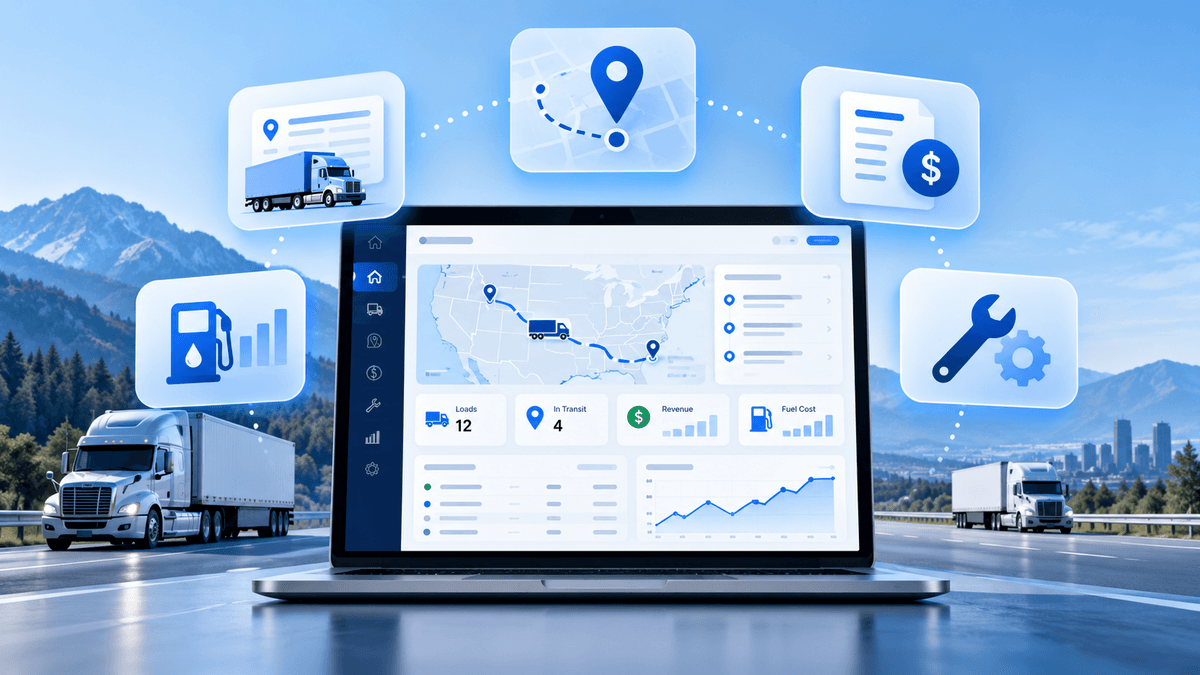
TenTrucks built its TMS around a specific principle: most freight fraud is preventable if the right data is checked at the right moment. Our AI does that checking automatically — on every rate confirmation, every load, every broker relationship — so your dispatcher doesn’t have to remember to run all five steps every time.
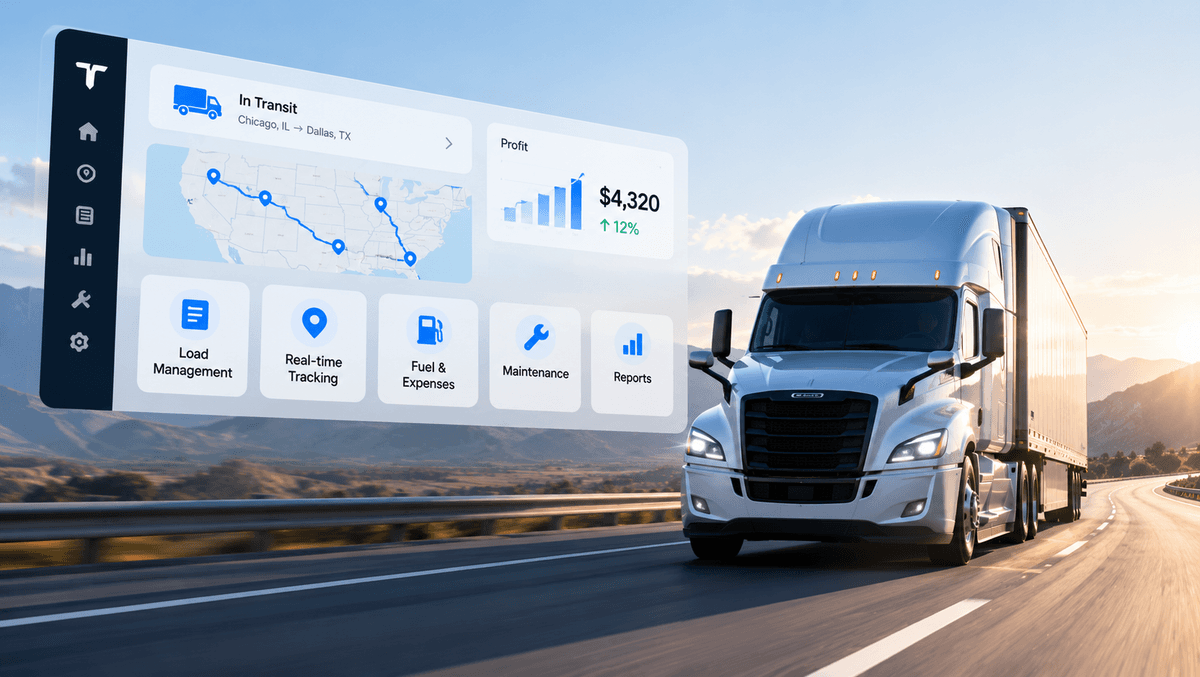
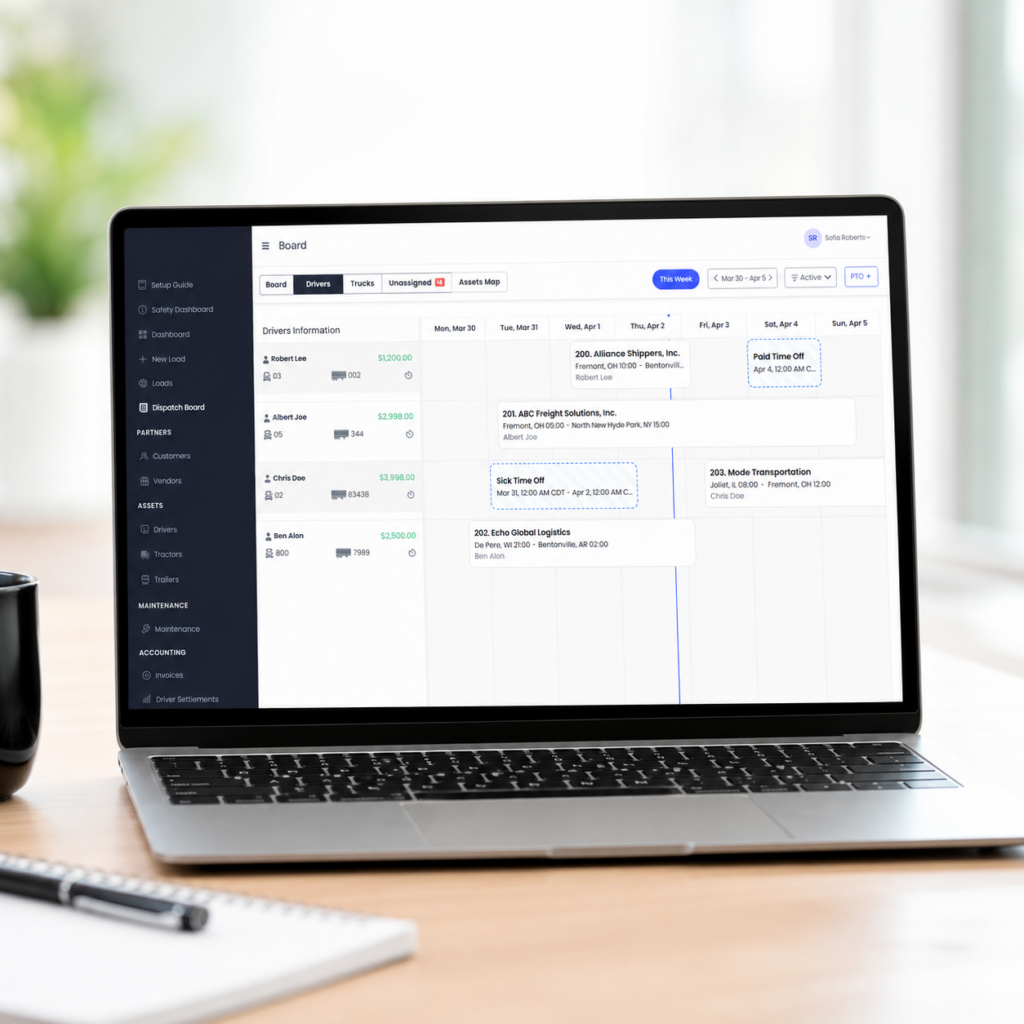
When a new rate confirmation lands in your TenTrucks inbox, the platform pulls live data from FMCSA SAFER to verify the broker’s authority, bond, and operating status before your dispatcher ever sees the load. If the broker’s authority lapsed yesterday, you know in seconds. The AI scans incoming documents for forgery markers, flags duplicate bookings across your fleet, and watches for the chameleon-carrier behavioral signatures that human eyes miss. The same TMS handles your dispatching, ELD compliance, and invoicing — so the fraud protection isn’t a bolt-on, it’s built into every workflow your team already uses. Learn more about TenTrucks TMS →
Carriers running TenTrucks tell us the AI has paid for itself the first time it caught a single fraud attempt. If you’re still verifying brokers by hand, by email, and by gut feel, you’re fighting 2026’s fraud problem with 2018’s tools.
Frequently Asked Questions
What is double brokering?
Double brokering is when someone poses as a legitimate carrier, accepts a load from a broker, then re-brokers that load to an actual carrier — pocketing the difference and disappearing before the real carrier gets paid. The real carrier hauls the freight, expects payment, and discovers the “broker” was a fraudster. Both the carrier and the original broker end up out of pocket.
How is carrier identity theft different from cargo theft?
Cargo theft is the physical taking of freight. Carrier identity theft is the digital impersonation of a legitimate carrier — using their MC number, name, and credentials to book loads under a stolen identity. The actual freight may still get delivered (or stolen), but the criminal pockets the payment. Identity theft is now the more common scheme; physical cargo theft is the smaller share.
Is my factor protected if I’m defrauded?
It depends entirely on your factor and your contract. Non-recourse factoring typically includes fraud protection — but only if you report the fraud within a specified window (usually 24–48 hours) and only if you followed the factor’s verification requirements before booking. Recourse factoring almost never protects you against fraud. Read your factor agreement, then read it again.
Should small carriers still use load boards in 2026?
Yes, but with a verification routine. Load boards aren’t the problem; lack of verification is. Use DAT and Truckstop with the 5-step verification system above, and run every new broker through SAFER plus a credit check before signing. Veteran owner-operators we work with report fraud rates near zero — not because they avoid load boards, but because they verify every booking.
How does AI help small carriers prevent fraud?
AI sits on top of a TMS and watches for patterns no human dispatcher could catch in real time: lapsed broker authority, mismatched contact information, behavioral signatures of chameleon carriers, duplicate load bookings across your fleet, forged document markers. The dispatcher sees a normal interface; the AI runs hundreds of checks in the background on every load. That’s how a one-dispatcher operation gets the same fraud protection a 500-truck fleet has.
This article reflects FMCSA, ATA, and ATRI data current as of May 2026. Fraud schemes evolve; this guide will be updated quarterly. If you’ve been hit by a fraud scheme not covered here, reach out — we’ll add it to the next update.